
You snap a photo of your lunch. A grilled chicken salad with avocado, cherry tomatoes, a drizzle of olive oil, and a handful of croutons. Now try logging that in a traditional calorie
tracker app.
You’d search “grilled chicken breast,” guess the weight, pick “avocado” from a list of twelve options, estimate how much olive oil was drizzled, and hope the crouton entry in the database was close enough. By the time you’re done, three minutes have passed and your numbers are probably off by 200 calories anyway.
This is the core problem with calorie tracking in 2026: most tools still make you do the nutritional math. And when tracking feels tedious, people quit. Studies show that the average user abandons a food diary within two weeks.
What if your calorie tracker could just see your food and figure it out?
How AI Calorie Tracking Actually Works
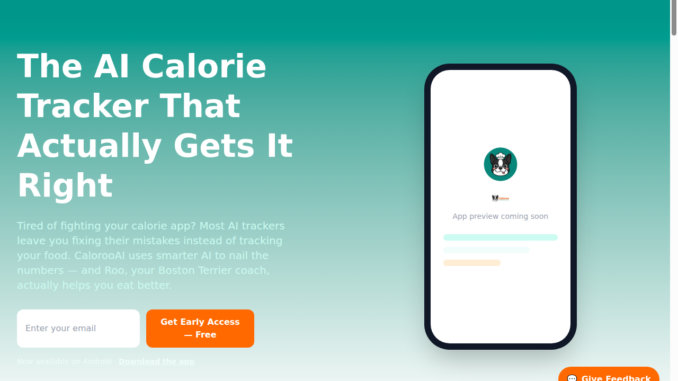
A new generation of AI calorie trackers is replacing manual food logging with computer vision, the same technology that lets self-driving cars recognize stop signs. Instead of searching a database, you take a photo of your plate and artificial intelligence identifies every item, estimates portion sizes, and calculates your macros in seconds.
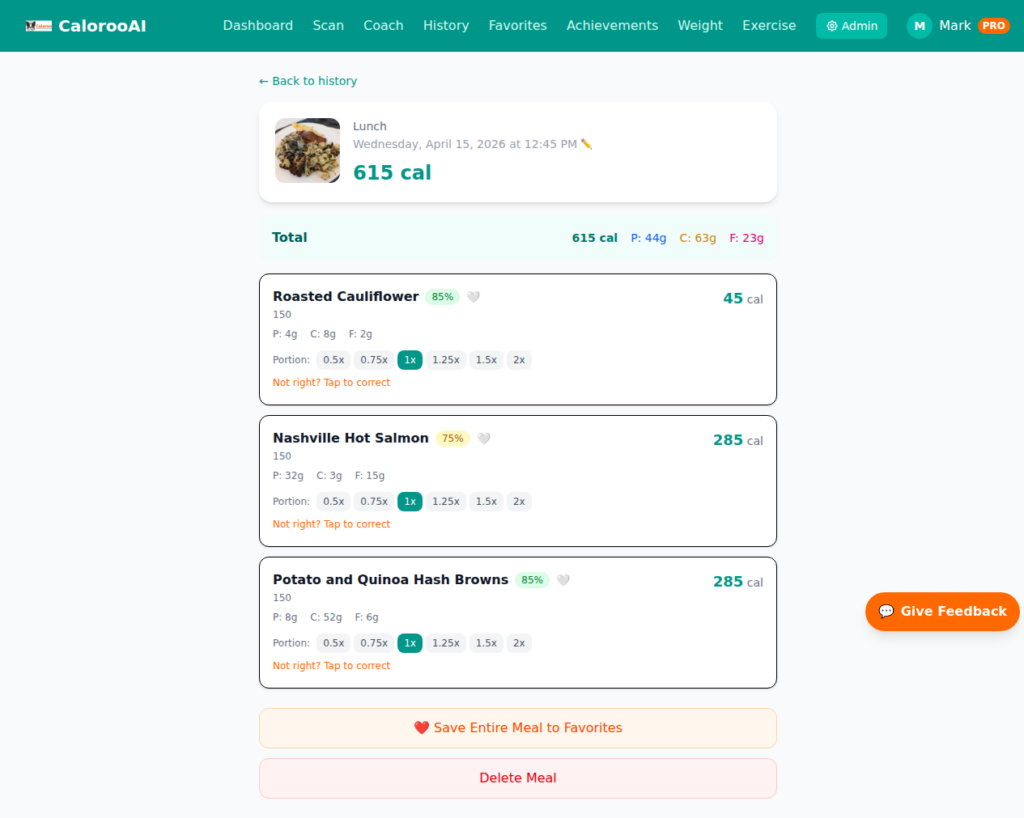
https://calorooai.com/ is one of the tools leading this shift. Snap a photo of that chicken salad, and its AI vision engine breaks down each component individually: the chicken breast (estimated 6 oz, 280 cal, 52g protein), the half avocado (120 cal, 10g fat), the croutons (45 cal), and even the olive oil drizzle (60 cal). The whole process takes about three seconds.
What makes this more than a party trick is the accuracy layer underneath. Each item gets a confidence score. If the AI isn’t sure whether that’s feta or mozzarella on your salad, it flags the item so you can confirm rather than silently guessing wrong. That transparency is what separates the most accurate calorie tracker approach from apps that give you a single number and hope for the best.
The Allergy Problem Nobody Talks About
Here’s something most calorie tracker apps completely ignore: food allergies and intolerances.
Over 32 million Americans live with food allergies. Millions more manage intolerances to gluten, dairy, or soy. If you’re one of them, tracking calories is only half the equation. You also need to know whether that restaurant sauce contains tree nuts or if the bread on your sandwich was made with milk.
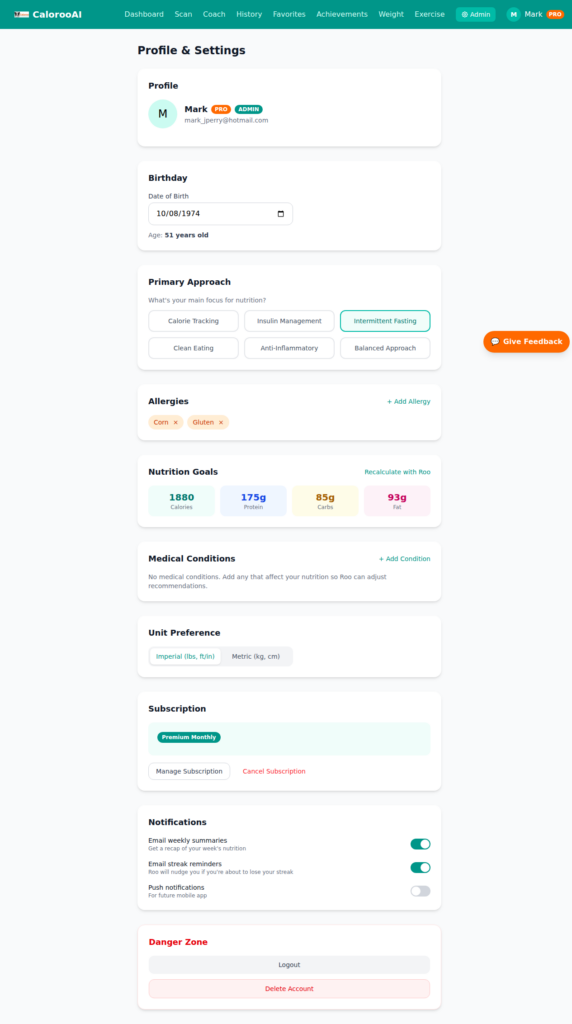
CalorooAI bakes allergen detection directly into the scanning process. When you set up your allergy profile, every food scan cross-references your allergens automatically. If the AI detects a potential allergen in your meal, you get an immediate alert, not buried in a footnote, but front and center before you eat.
This is particularly useful for the FDA’s Top 9 allergens (milk, eggs, fish, shellfish, tree nuts, peanuts, wheat, soybeans, and sesame) but extends to less common sensitivities too. The system even flags potential cross-contamination risks, something that most free calorie tracker apps don’t consider at all.
Meet Roo: A Nutrition Coach That Doesn’t Take Itself Too Seriously
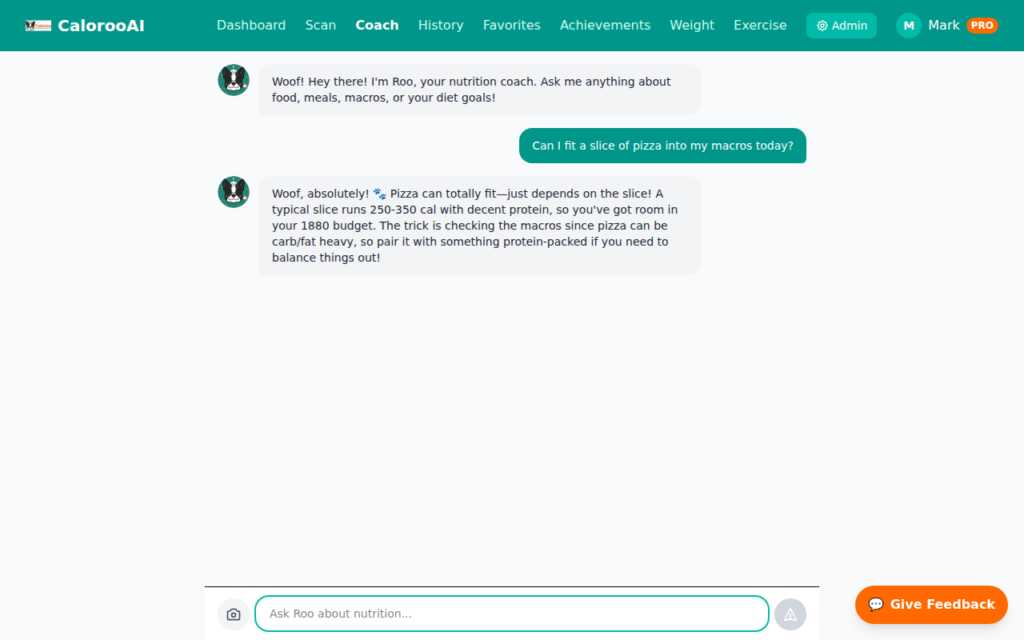
One of the more unexpected things about CalorooAI is its AI nutrition coach, a Boston Terrier named Roo.
Yes, a cartoon dog. But there’s a smart idea behind it.
Most nutrition apps take a clinical approach. Sterile dashboards, red warning numbers when you go over your calories, guilt-inducing language. Research on health app engagement shows this approach backfires for most people. Shame doesn’t build habits. Consistency does.
Roo takes the Duolingo approach to nutrition coaching: encouraging, slightly cheeky, and always focused on progress rather than perfection. Go over your protein target? Roo celebrates. Miss a day of logging? Roo checks in without judgment. Have a question about whether you can fit dessert into your macros? Roo will walk you through it in one or two sentences, not a lecture.
The coaching is grounded in real nutrition science, including Mifflin-St Jeor BMR calculations, activity-adjusted TDEE, and protein targets based on body weight and activity level. But it’s delivered in a way that feels like texting a supportive friend rather than consulting a textbook.
What You Actually Get for Free
A fair question with any AI calorie tracker: what’s the catch?
CalorooAI has a free tier that includes up to five AI photo scans per day, manual food entry, barcode scanning, allergen profile and alerts, streak tracking, and a daily nutrition tip from Roo. That’s a genuinely usable free calorie tracker app, not a crippled trial designed to frustrate you into paying.
The premium tier ($6.99/month or $49.99/year) unlocks unlimited scans, full chat access to Roo for personalized coaching, weekly nutrition summaries, meal suggestions, and nutrition label scanning. If you’re someone who logs three-plus meals a day and wants the coaching layer, premium makes sense. If you’re a casual tracker, the free tier covers you.
Who This Is Actually For
CalorooAI isn’t trying to replace the spreadsheet-and-food-scale approach that bodybuilders swear by. If you’re weighing your chicken to the gram, you probably don’t need AI vision.
It’s built for the much larger group of people who want to be more intentional about what they eat but find traditional tracking too tedious to stick with. Parents juggling meal prep. Busy professionals grabbing lunch between meetings. Anyone managing food allergies who needs an extra safety net. People who’ve downloaded a calorie tracker app before, used it for ten days, and given up.
The thesis is simple: if tracking takes three seconds instead of three minutes, more people will actually do it. And if a friendly Boston Terrier is nudging you along the way, you might even enjoy it.
Try It Yourself
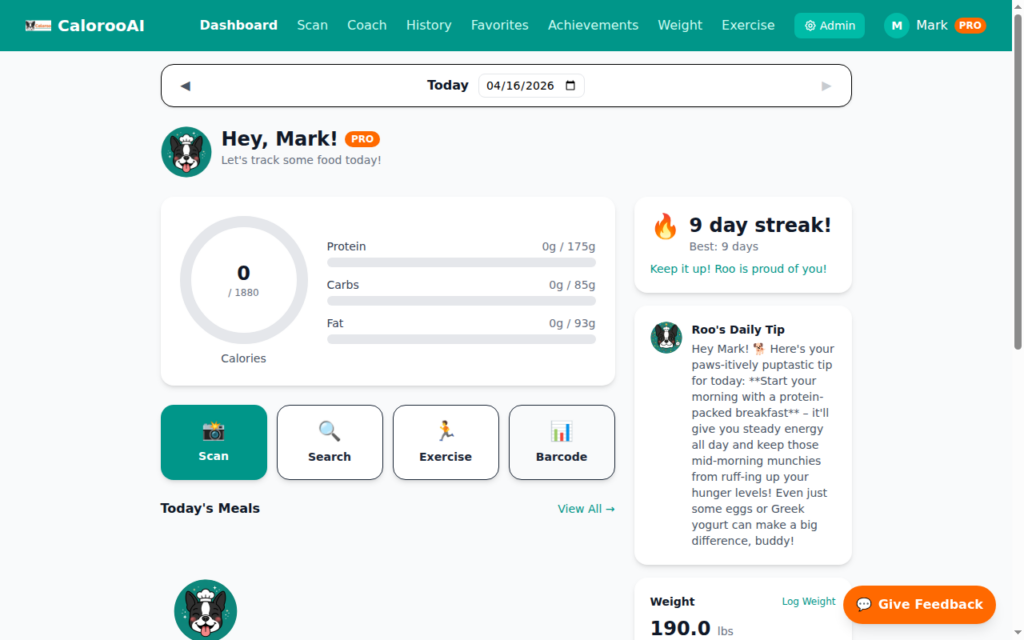
CalorooAI is currently in beta and accepting new sign-ups. You can create a free account and start scanning meals today.
Leave a Reply